We rebuilt the biometric time-tracking system for a Texas school district with new hardware and custom software, ensuring full compatibility with legacy fingerprint data and no data loss during remote deployment.
The existing time-tracking system relied on outdated hardware, and the original fingerprint scanner was no longer supported by its manufacturer. Moreover, the legacy software was incompatible with modern operating systems.
The system stored tens of thousands of employee records and hundreds of thousands of fingerprint scans. The new solution had to recognize older fingerprint data so that long-time employees would not need to re-enroll; in other words, the update had to work seamlessly with legacy data.
We identified and tested a new hardware provider for touchscreen time clocks and fingerprint scanners, designing custom casings to fit the new devices. We developed new software that replicated all existing functionality and modified the device drivers to recognize fingerprints from the old system. In addition, we implemented a remote deployment mechanism to update all devices in the field without on-site intervention, ensuring a smooth transition with zero data loss.
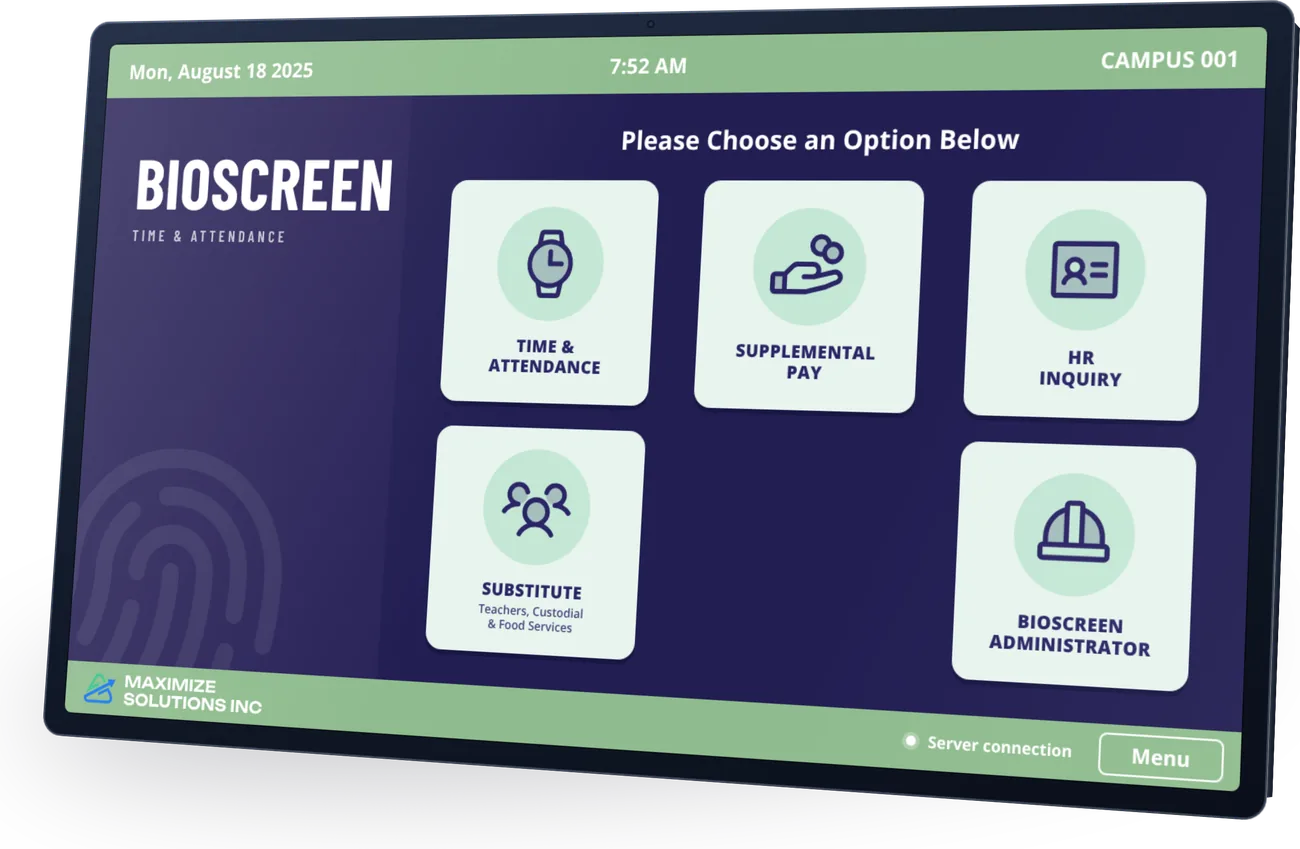
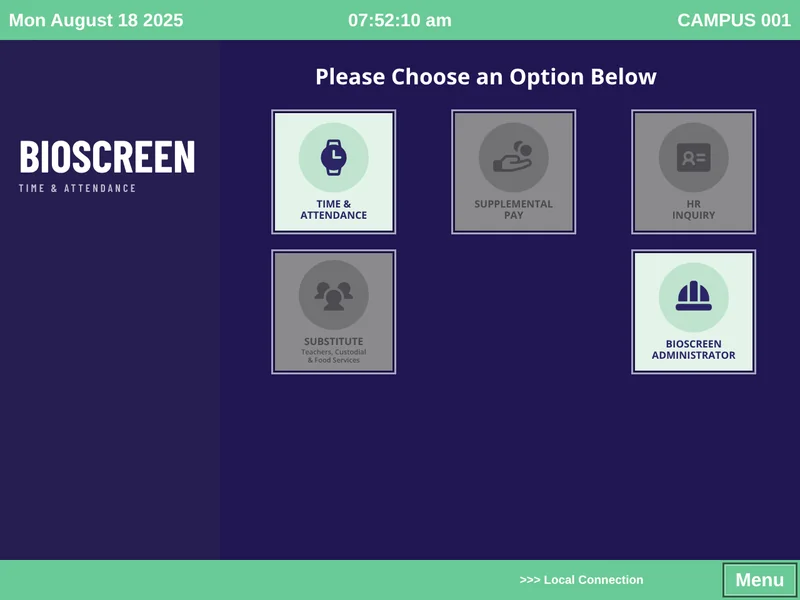
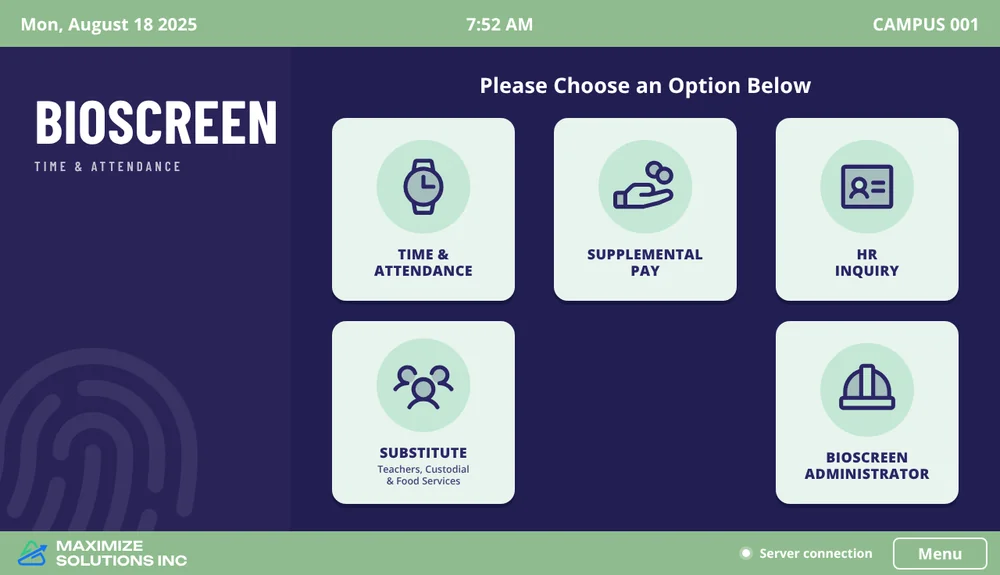
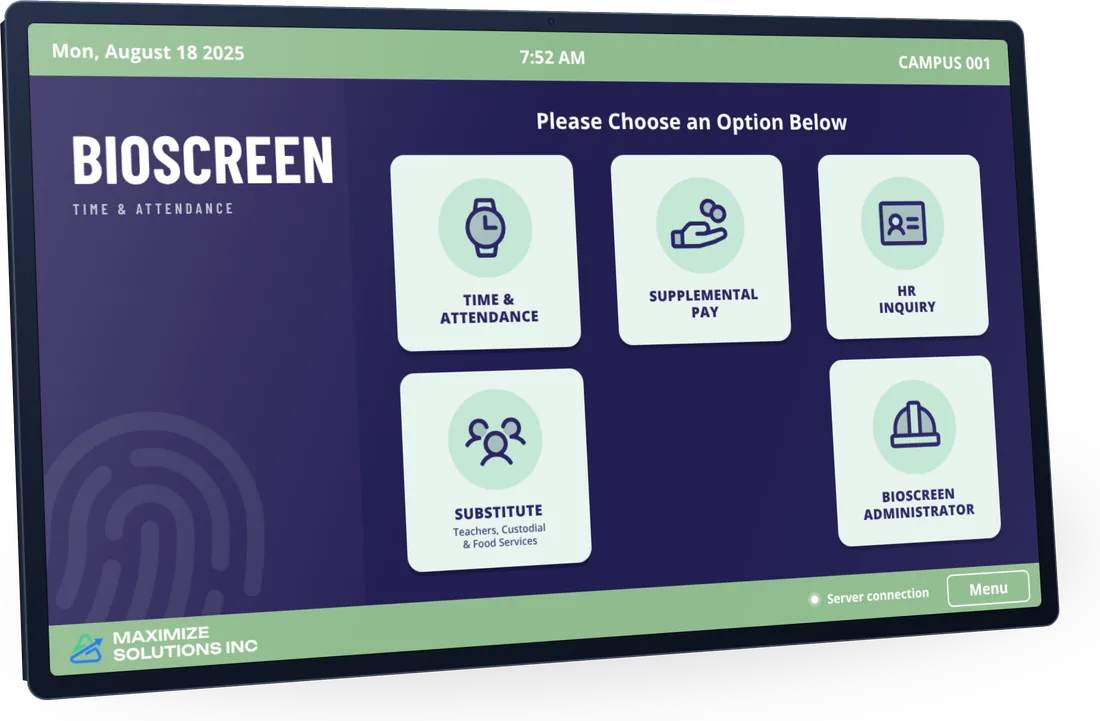
The main menu kept all five modules. Every module is active and the screen is easier to read.


New touchscreen time clocks and fingerprint scanners, tested before rollout. Custom casings designed by our team.
The BioScreen app rebuilt with all existing functions and a refreshed interface.
Scanner drivers modified so the new devices read fingerprints enrolled on the old system.
Updates reach every terminal in the field without visits to campuses.
Employees use the same five modules as before, on new hardware.
Each terminal combines a touchscreen with a fingerprint scanner in a casing designed by our team.

Simplified Google Cloud adoption by building high-level API layers and client libraries for Spanner and BigTable. This solution enabled over 1,000 developers to integrate with Google Cloud faster and with less overhead.
Modernized shipyard operations by refactoring decades-old legacy software and automating core workflows, reducing dependency bottlenecks and improving scheduling for oil tanker production
Optimized warehouse operations for Amazon sellers by developing AI tools, voice interfaces, and AR-based shelf tracking. These innovations resulted in a 40% reduction in backlog and enabled the resale of returned inventory.